
Case Context
This case study demonstrates the application of a dual card pattern strategy within our comprehensive multi-brand e-commerce design framework. As businesses increasingly manage multiple brand identities within unified platform ecosystems, the challenge of maintaining both operational efficiency and distinct brand personalities has become critical.
Agenda
1
Assumptions
2
Implementation Strategy
3
Real-World Product
4
Impact and Validation
-
Context and Assumption
Assumptions
Given the lack of complete data in the early stage, I made a few assumptions about what might work best for the product team, as well as both users and business goals.
Coverage effectively addresses 80% of homepage use cases:

Pattern Recognition & Familiarity

Flexibility Through Variation Per Brand

Development Efficiency

2. Implementation Strategy
Framework Model
This case study applies principles from our 'Building Design Framework for Multiple-brand Products' to validate a critical hypothesis: whether collection card and product card patterns can effectively function as primary homepage elements across different brand implementations.
Through focused, small-scale testing, i examine pattern performance and scalability before broader framework implementation, ensuring our core assumptions are validated in practice.


3. Real-World Product Testing
Project Context
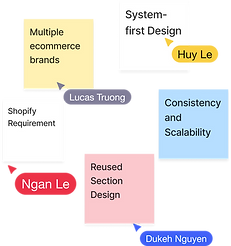
I was responsible for designing and conducting research for a customizable eCommerce product named SOUL, developed for our company. Based on the business requirements, the product supports four distinct brands: fashion, shoes, furniture, and food. It is designed and optimized for sale on the Shopify Market.


3. Real-World Product Testing
Sketch and Design
Based on what I learned from “Bridging the Gap: A Problem-Solving Journey in Section-Based Theme Design”, I approached this project by designing with a section-based layout rather than creating a fully designed homepage. . This allowed for greater flexibility, reusability, and customization across different brand types.
3. Real-World Product Testing
Testing
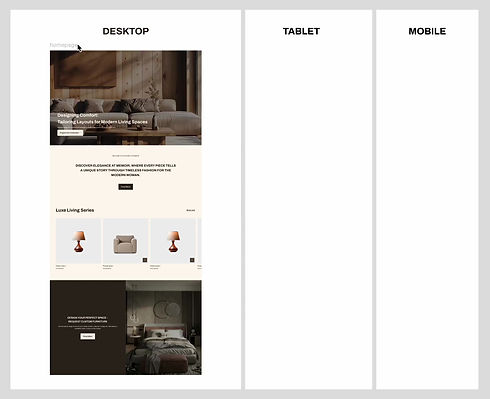
Theme Modes (4 Brands)

Responsive (Desktop/Tablet/Mobile)

3. Real-World Product Testing
Outcome
-
Market Success: Successfully launched on Shopify marketplace with significantly higher sales than previous company products
-
Pattern Validation: 67% of sections (21/32) across 4 brands built using only collection and product cards, proving strategy effectiveness at commercial scale
4. Impact and Lesson
Impact and Assumption Validation
Successfully handled 95% of homepage sections needs across 4 brands
Reduced new brand setup from 8 weeks to 2 weeks
Generated 15+ unique layout sections using same 2 components
Key Achievement: Validated that a simplified 2-pattern approach can effectively serve diverse brand requirements while maintaining development efficiency and user experience consistency at commercial scale.
Challenge: Need extensive time to test whether these 2 patterns can truly handle all types of e-commerce scenarios and identify potential limitations when applied in real-world conditions